OBSTETRICS AND GYNECOLOGY
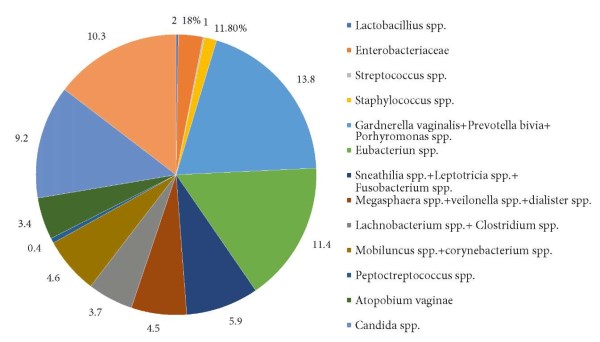
Objective: to study the features of the vaginal microbiome in women with postmenopausal OVA and to conduct a comparative analysis of the microbiota in groups with varying degrees of severity of symptoms.
Materials and methods: a prospective study was conducted involving 212 naturally postmenopausal patients (age 48–59 years) with moderate IVA. The degree of symptoms was assessed using the VSQ questionnaire and the vaginal Health index. The state of microbiocenosis was analyzed by PCR “Femoflor 16”. The patients were divided into three groups according to the severity of symptoms: mild (≤5 symptoms, n=85), moderate (6-10, n=94) and severe (≥11, n=33).
Results: a clear correlation was found between the severity of the symptoms of IVA and the nature of dysbiotic changes. In the group with severe symptoms, 90.9% of patients were diagnosed with moderate or severe aerobic/mixed dysbiosis with a predominance of Gardnerella vaginalis, Prevotella bivia, Porphyromonas spp. and Streptococcus spp., as well as a significant decrease in lactobacillus levels (median — 10^3.3 CFU/ ml). In the group with mild symptoms, 65.9% had normocenosis or conditional normocenosis, but the total bacterial mass was reduced (median — 10^4–5 CFU/ml). In 15.4% of patients, “silent atrophy” (objective signs of IVA in the absence of complaints) with a variable state of the microbiota was detected.
Conclusion: the severity of clinical manifestations of BBA in postmenopausal women is associated with specific changes in the vaginal microbiota: a pronounced symptom complex correlates with dysbiosis and inhibition of lactobacillar flora. The data obtained substantiate the need for a comprehensive diagnosis,
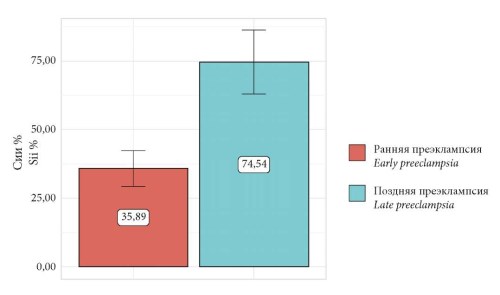
Оbjective: evaluation of the effectiveness of bioimpedance cardiography for the differential diagnosis of hemodynamic profiles in early and late preeclampsia (PE).
Materials and methods: the prospective study included 52 pregnant women: 32 with PE (19 — early, 13 — late) and 20 in the control group. The hemodynamic condition was assessed by bioimpedance cardiography. The statistical analysis was performed in SPSS Statistics 26.0.
Results: it was found that early PE is characterized by a 3.8-fold increase in total peripheral resistance (OPS) (4467.0 vs. 1175.0 din·with·cm⁻⁵, p<0.001), a 2.1-fold decrease in cardiac index (1.58 vs. 3.64 l/min/m², p<0.001) and cardiac minute capacity (MPS) increased 1.8 times (3.53 vs 6.31 l/min, p<0.001), while extracellular fluid volume increased by 18.8% (p<0.001) in early PE. Statistically significant differences in the parameters of all hemodynamic groups of PE from the control were revealed (p<0.05).
Conclusion: bioimpedance cardiography is a simple, non-invasive method for monitoring central hemodynamics and fluid sectors, which makes it possible to effectively differentiate the hemodynamic profiles of PE. The study showed that early PE is characterized by a hypokinetic type of blood circulation with high heart rate and low cardiac output, while late PE is characterized by an increase in cardiac output against a background of normal or even reduced heart rate. Thus, a comprehensive assessment of central hemodynamics makes it possible to optimize risk stratification and ensure targeted prevention and antihypertensive therapy in pregnant women with various PE phenotypes.
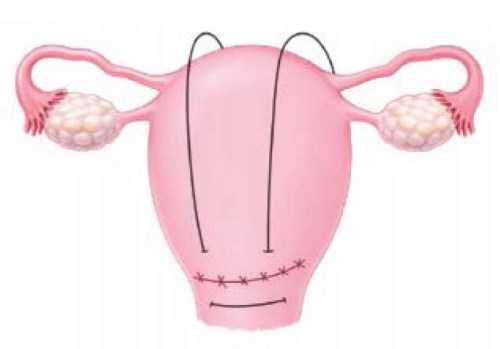
This review presents an analysis of the development and evolution of uterine compression hemostatic sutures as a surgical method for controlling obstetric hypotonic hemorrhage. A search of Russian and international scientific literature was conducted across the following citation databases: «eLIBRARY», «PubMed», «Google Scholar» and «Scopus», covering the period 1997–2024. The key stages of the method’s development are described, from the introduction of the B-Lynch suture to its modern modifications (Hayman, Cho, Pereira, and Radzinsky–Rymashevsky techniques). A comparative analysis of their effectiveness, technical features, and potential adverse outcomes is provided, including the risks of myometrial necrosis, Asherman syndrome, and infectious complications. The analysis of the literature has shown that, despite the high effectiveness of classical techniques (up to 90–97%), their use is associated with a risk of postoperative complications. Particular attention is given to the modern technique developed by the Rostov school — the “braided” compression suture (Rymashevsky-Kantsurova), which ensures reliable hemostasis, uniform distribution of compression, and a reduction in complication rates. It is concluded that obstetric surgery is evolving toward organ-preserving approaches and further refinement of surgical hemostasis.
Оbjective: to evaluate the effectiveness of using MAPP-A and PlGF in the first trimester of pregnancy and the rate of increase in angiogenic imbalance (sFlt-1/PLGF) in the second to third trimesters for early and accurate stratification of highrisk pregnant women for the development of preeclampsia.
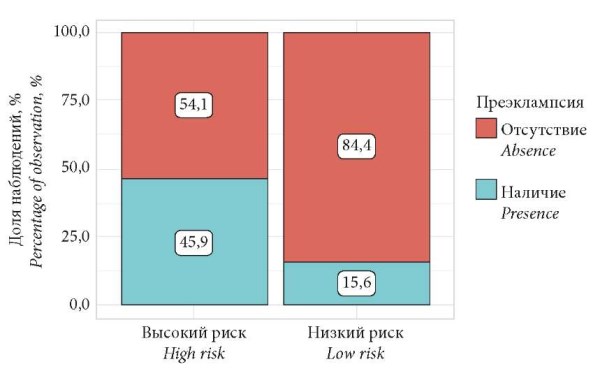
Materials and methods: the prospective study included 69 pregnant women divided into two groups: group 1, with a high risk of preeclampsia, n=37, and group 2, with a low risk of preeclampsia, n=32. The levels of angiogenesis biomarkers: PlGF and sFlt-1 were determined in dynamics, at gestation periods of 20, 24, 28, 32 weeks.
Results: in group 1, at 12 weeks, the levels of RARP-A (1.55 ± 2.0 iU/l) and PlGF (27.34 ± 25.80 iU/l) were lower than in women from group 2, RARP-A (3.23 ± 2.34 iU/L, p<0.001) and PlGF (43.21 ± 14.58 iU/l, p=0.012), respectively. The sFlt-1/PlGF study showed an increase in the 1st group at 24 weeks - 31.2 ± 49 iU/l compared with the 2nd group - 3.7 ± 1.8 iU/l (p=0.002). The concentration of sFlt-1 in the high-risk group increased from the 20th to the 32nd week, reaching 6369.4 ± 5078 pg/ml (p=0.030). Preeclampsia developed in 45.9% of women in group 1, as opposed to 15.6% of women in group 2 (p=0.003), odds ratio 0.217 (95% CI: 0.077–0.609).
Conclusion: assessment of the level of PAPP-A and PlGF in the first trimester and the dynamics of sFlt-1/PlGF at 20, 24, 28, and 32 weeks allows stratification of the risk of preeclampsia in high-risk pregnant women by preeclampsia. The revealed dynamics of angiogenic imbalance, significant differences were obtained from the 24th week, is 8-12 weeks ahead of the clinical manifestation.
PSYCHIATRY AND NARCOLOGY
Objective: to identify associations of insomnic, depressive, suicidal, and anxiety manifestations with the severity of psychopathological symptoms in individuals with schizophrenia.
Materials and methods: a comparative cross-sectional study of 390 patients was conducted. The following scales were used: PANSS, Pittsburgh Sleep Quality Index, Calgary Depression Scale, Columbia Suicide Severity Scale, Hamilton Anxiety Scale. Statistical analysis was performed using the Mann–Whitney U-test and Spearman rank correlation coefficient.
Results: insomnia disorders were associated with symptoms P1, P3 and the total score on the positive symptoms subscale; depressive manifestations were associated with greater severity of all positive and negative symptoms except P4, P5, N5; anxious manifestations - with greater severity of symptoms P3, P6, and with lesser severity of symptoms N2, N3, N6; the intensity of suicidal thoughts intensity positively correlated with the severity of symptoms P3, P6, N4, as well as with the total score on the positive symptoms scale; A history of suicide attempt was associated with more severe symptoms of P1, P3, and P6.
Conclusion: insomnia, depressive, anxiety, and suicidal tendencies were associated with the severity of psychopathological symptoms in patients with paranoid schizophrenia, but the nature of the associations was heterogeneous. The severity of insomnia disorders was positively correlated with the severity of positive symptoms. Depressive symptoms, suicidal tendencies, and anxiety were associated with the severity of both positive and negative symptoms.
INTERNAL DISEASES
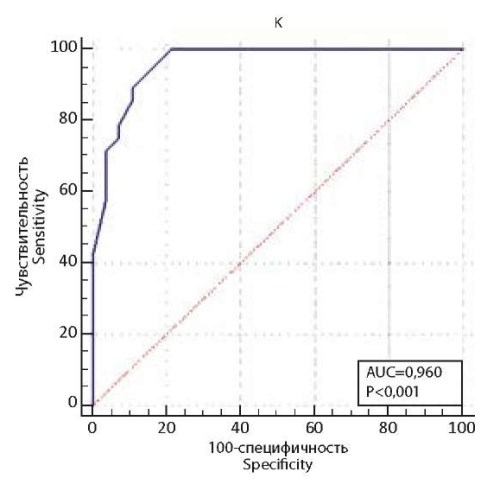
Objective: to develop a model for predicting the risk of hemodynamically significant coronary atherosclerosis in patients with a pretest probability of coronary heart disease greater than 15%.
Materials and methods: in 56 patients matched for age and gender with a presumed diagnosis of coronary artery disease, the coronary artery calcification index (CAI) was calculated using the Agatston method, GLSavg was assessed, and selective coronary angiography was performed. Using Statistica 12.0 (StatSoft, USA), a mathematical model was developed using logistic regression to calculate the K coefficient, which allows for determining the indications for selective angiography.
Results: patients in the study groups were randomized based on the Agaston index as follows: group 1 — 74.0±17.82 U, group 2 — 297.0±79.83 U, group 3 — 716.0±116.24 U. Global longitudinal strain of the left ventricle was significantly higher in group 1 and did not differ between groups 2 and 3. A mathematical model was then developed to calculate the K coefficient, where the cutoff level for assessing the risk of detecting hemodynamically significant stenosis was 0.37. The diagnostic sensitivity was 92.86% and specificity 89.29% (p<0.0001).
Conclusion: this study demonstrates the importance of developing tools for predicting the presence of hemodynamically significant stenosis based not only on structural changes in the coronary arteries, including calcification, but also on global left ventricular systolic function.
ENDOCRYNOLOGY
Height is one of the important indicators of a person’s physical health and psychosocial living conditions. The factors determining the final growth of a person include the effects of growth hormone, as the main stimulator of linear growth, as well as sex hormones, which determine the timing of the cessation of the growth effect. It should be borne in mind that there is such a disease as stunting, which is associated with a deficiency of growth hormone. In medicine, many causes of this pathology have been studied, but it is not uncommon for the cause of stunting to be determined, and such stunting is called idiopathic. The importance of following modern diagnostic algorithms, as well as timely detection of complications of stunting, determine the further management of such patients and improve their quality of life. Using the example of a clinical case, an algorithm for the differential diagnosis of idiopathic familial stunting is demonstrated, and the importance of a multidisciplinary approach is emphasized.
Objective: to study the compositional features of the intestinal microbiome at the level of certain microbial species in the intestine using NGS sequencing of bacterial DNA for the 16S rRNA gene in patients with different metabolic phenotypes of obesity.
Materials and methods: ninety-five patients (17 men and 78 women, mean age 50.4±4.3 years) were examined. Two groups were formed: group 1 (n=40) — patients with metabolically healthy obesity (MHO), group 2 (n=55) — patients with metabolically unhealthy obesity (MUHO). The intestinal microbiome was studied using metagenomic analysis. Sequencing of the v3-v4 variable region of the 16S rRNA gene was performed from fecal samples after DNA isolation.
Results: statistically significant (p<0.05) differences in the quantitative indices of certain microbial species in the colon were found between patients with metabolically healthy obesity and those with metabolically unhealthy obesity. Patients with metabolically healthy obesity had higher levels of F. prausnitzii in their intestinal microbiomes compared to those with metabolically unhealthy obesity.
Conclusions: the intestinal microbiomes of patients with metabolically healthy obesity and those with metabolically unhealthy obesity differed at the species level for certain microbial taxa.
PAEDIATRICS
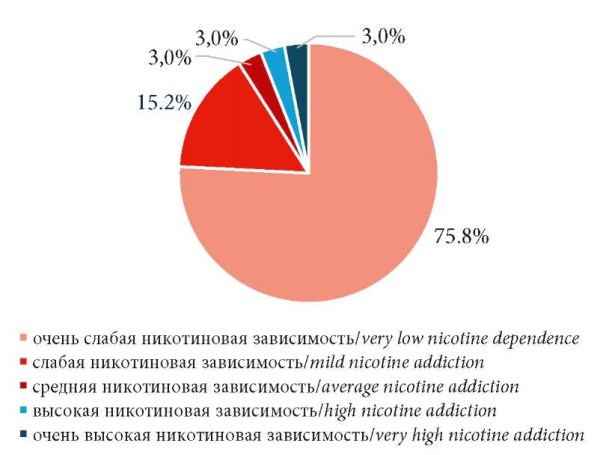
Objective: to identify smoking, nicotine addiction, and study the parameters of external respiration using computer bronchophonography in children depending on smoking.
Materials and methods: 142 children aged 11–17 years, hospitalized in a pediatric hospital, were examined. Smoking in children was detected by questionnaire and determination of cotinine in urine, the degree of nicotine addiction was determined by the Fagerström test, and computer bronchophonography was used to assess the function of external respiration.
Results: it has been established that more than 40% of children aged 11–17 years old try to smoke and more than 27% are smokers. More than 20% of children smoke daily and have an average smoking experience of 2.5 years at this age. Every fourth smoking child has a weak to very strong nicotine addiction. When comparing the acoustic parameters of external respiration using computer bronchophonography, it was found that the indicators in the mid-frequency range were four times higher among smoking children compared to non-smoking children.
Conclusions: thus, more than 27% of children over the age of 11 smoke and have varying degrees of nicotine addiction. Smoking children have increased acoustic spectrum of external respiration in the medium-frequency range, which may indicate the predominant lesion of the middle bronchi in smoking. Computer bronchophonography is an important method of early diagnosis of respiratory pathology in smoking children.
INFECTIOUS DISEASES
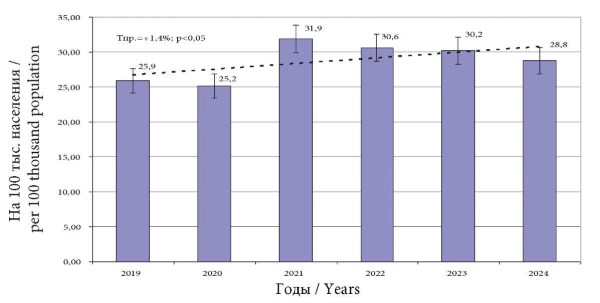
Objective: analysis of the causes of deaths in HIV-infected patients with the identification of the most significant nosology for making a prognosis and determining the direction of preventive measures.
Materials and methods: the data on deaths in HIV-infected patients for the period from 2019 to 2024 living in the Omsk Region were analyzed. The study is retrospective, continuous, descriptive. The long-term dynamics were assessed and forecasting was performed using a regression model.
Results: during the analyzed period, a tendency towards an increase in fatal outcomes of patients with HIV infection was noted. By gender, no significant changes in the ratio of men and women were revealed. However, significant changes in the age structure of the deceased were noted towards a shift to older age groups. The proportion of fatal outcomes from the progression of HIV infection and AIDS is decreasing, with a simultaneous increase in causes not related to the underlying disease. An increase in fatal outcomes from diseases of the cardiovascular system, gastrointestinal tract, injuries, poisoning and external causes was observed. However, when calculating the growth rate, a significant increase was noted in diseases of the respiratory system and cardiovascular pathology as causes of fatal outcomes in patients with HIV infection.
Conclusions: during the analyzed period, the age and structure of causes of fatal outcomes among patients with HIV infection changed significantly. The data obtained will allow us to develop and make informed decisions on the prevention of somatic pathology in the aging population with HIV infection.
Brucellosis is a systemic infectious zoonotic disease that tends to become chronic and is characterized by damage to the musculoskeletal, nervous, cardiovascular, genitourinary and other body systems. This article describes clinical cases of brucellosis infection in donors, incidentally identified as a result of blood donation. The primary cause of the disease in donors was infection with the brucellosis pathogen through alimentary and contact transmission. Blood donation is an important aspect of healthcare, ensuring patients’ access to essential blood components. Donated blood must undergo thorough laboratory testing before use to prevent the transmission of infectious diseases, including brucellosis. Ensuring the safety of transfusions is of paramount importance. The implementation of comprehensive control measures, including screening for brucellosis, is essential to prevent iatrogenic transmission of the pathogen and ensure the safety of recipients. The incidental detection of infection in donors indicates a lack of awareness of this disease and the need to improve current laboratory diagnostic protocols and preventive measures. This article substantiates the importance of implementing comprehensive clinical and laboratory monitoring of the donor population.
INFECTIOUS DISEASES, EPIDEMIOLOGY
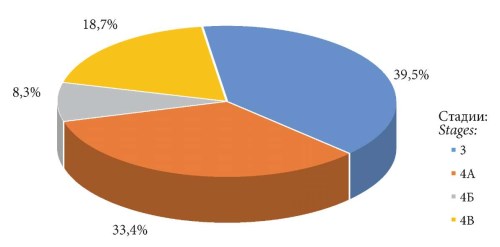
Objective: to study epidemiologic and clinical-laboratory indicators of HIV-infection manifestation at different stages in newly diagnosed patients, to identify factors influencing untimely diagnosis, assess their adherence to further dispensary monitoring and ART treatment.
Materials and methods: a retrospective analysis of 50 patient records of patients hospitalized at the Infectious Diseases Hospital of the Kaliningrad Region in 2019–2023 was conducted to assess their initial medical care, clinical and epidemiological data, comorbid background, follow-up results, and adherence to treatment.
Results: of the patients analyzed, 54% were men and 46% were women. The mean duration of infection was 4.8±0.6 years. 58% of hospitalized patients were in advanced stages of HIV infection, 52% of them had marked immunodeficiency, indicating late diagnosis, 62.5% of patients had a comorbidity index of more than 6 points. Only 4 (8%) patients were hospitalized with a provisional diagnosis of HIV infection based on rapid testing, the remaining 46 (92%) were allocated to other departments based on the prevailing symptoms. The lack of examination of patients at the stage of outpatient care, when appropriate indications exist, indicates the low awareness of physicians about the clinical picture of HIV in various stages. The low percentage of patients (58.5%) who started therapy within the first year highlights the importance of active motivational and patient-centered work in hospital settings to ensure adherence to treatment.
Conclusions: clinicians need to be more alert to diagnostically complex patients with HIV infection, who may present with an advanced picture of concomitant pathology, regardless of their age and immune status.
EPIDEMIOLOGY
The pandemic of the new coronavirus infection COVID-19 has led to significant changes in the healthcare system
worldwide since the beginning of 2020. At the beginning of the pandemic, medical and preventive institutions took the necessary measures both for early diagnosis and timely treatment of patients, and to prevent the spread of infection. Infection control measures have been strengthened, and the use of personal protective equipment has been expanded (widespread wearing of masks for staff and patients, testing of asymptomatic patients, and the use of N95 respirators and eye protection) to prevent transmission. To date, there is no systematic analysis of information on hospital-acquired SARS-CoV-2 infection in the scientific literature. A number of studies have shown that about 20% of cases of SARS-CoV-2 infection turned out to be nosocomial. With the emergence of more contagious strains of coronavirus, large-scale outbreaks have been described in a number of single-center studies, including among vaccinated individuals. Since December 2021, when the SARS-CoV-2 variant “Omicron” became the dominant strain, the risk of infection of the population, especially among vulnerable groups, has increased significantly, and a number of domestic and foreign authors have noted numerous outbreaks of the disease in boarding schools and nursing home. Timely diagnosis and assessment of the nature of nosocomial infections in different medical institutions is complicated by the potential variability of hospital testing methods and the symptomatic status of patients with a large number of cases of asymptomatic carriage. The aim is to conduct a systematic review of literature sources on international scientific databases over the past 5 years (PubMed, Google Scholar, Scopus) by keywords: “nosocomial infections”, “prevention of nosocomial transmission of coronavirus infection”, “risk groups for new coronavirus infection”, “nosocomial infections”, “prevention of nosocomial transmission of coronavirus infection”, “risk groups for new coronavirus infection”. 29 sources were selected that meet the search criteria for subsequent systematization. The sources contain up-to-date information on methods of preventing nosocomial transmission of SARS-CoV-2, as well as statistical information on nosocomial morbidity.
Objective: analysis of the structure and characteristics of the consumption of various types of tobacco and nicotine-containing products by Veterans.
Materials and methods: the analysis was carried out based on the results of a survey of Veterans using a developed questionnaire. The survey was conducted at the offices of the Defenders of the Fatherland Foundation. The proportions of respondents who consumed various types of products, indicators of smoking intensity and knowledge about the health risks of tobacco and nicotine were calculated. The comparison of groups of consumers and non-tobacco/nicotine users was carried out using a two-proportional Z-test.
Results: 1,135 Veterans took part in the survey. Almost all tobacco/ nicotine users (96.2%) used tobacco products. The share of consumers of nicotine-containing products was 25.4%. The majority of consumers (78.2%) consumed only tobacco products, 17.8% consumed both tobacco and nicotine-containing products, and a small proportion (3.9%) consumed only nicotine-containing products. Industrially produced cigarettes were the most consumed in terms of quantity — 17.5 cigarettes/day. 64.4% of consumers of nicotine-containing products used electronic cigarettes and vapes. 96% of consumers of nicotine-containing products also consumed tobacco products, smoking an average of 16 cigarettes/day.
Conclusion: the consumption of tobacco and nicotine-containing products and the intensity of smoking among the Veterans were higher than among the civilian population. The perception of the tobacco/nicotine to health was lower Among SVO participants.
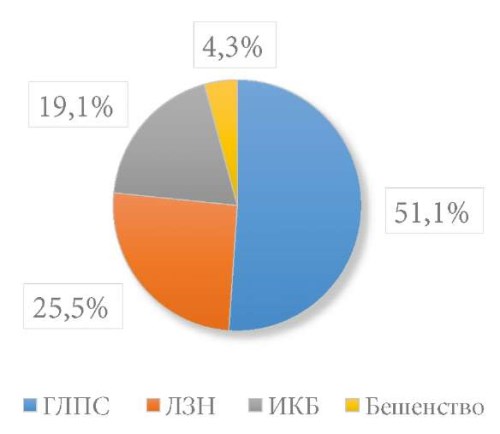
The article analyzes the incidence of natural focal infections (NFI) in the Volgograd region (VR) for the period from 2015 to 2024, taking into account landscape-ecological zoning. The work uses official statistical data from the Rospotrebnadzor institutions of the VR on NFI over the past 10 years. The main research method is epidemiological analysis. It was found that the incidence of NFI was distributed unevenly across landscape-ecological zones (LEZ). Thus, in the Northern Zone of Chernozem Soils (NZChS), the majority of cases of hemorrhagic fever with renal syndrome (HFRS) were registered — 57,1% of all cases identified in the VR and 50% of rabies; in the Central Zone of Dark Chestnut Soils (CZDCS), 70% of all cases of West Nile fever (WNF); 69,8% — ixodid tick-borne borreliosis (ITBB); in the Southern Semi-Desert Zone of Light Chestnut Soils (SSDZLCS) — 65,9% of all cases of Crimean hemorrhagic fever (CHF), 28,6% — Q fever; in the Trans-Volga Semi-Desert Zone of Light Chestnut Soils (TVSDZLCS) — 57% of patients with Q fever, 25% — rabies. The minimum percentage of NFI (7,2% of the total number in the VR) was noted in the Northern Part of the Volga-Akhtuba Floodplain (NPVAF), including 14,3% of Q fever and 10% of all cases of WNF in the VR. In some cases, natural foci of infections only partially coincide with the boundaries of the LEZ. In this connection, the need for additional ranking of the territory by epizootological and epidemiological manifestations of NFI has been shown.
Objective: to assess the epidemiological risks of rabies spread among carnivorous animals in the territories of new subjects of the Russian Federation: Donetsk People’s Republic (DPR), Luhansk People’s Republic (LPR), Zaporozhye Region (ZR), Kherson Region (KR).
Materials and methods: analysis of information monitoring data from official websites and statistical reporting forms on infectious morbidity in Ukraine.
Results: the current epizootic-epidemiological situation of rabies among carnivorous animals in the new subjects of Russia is defined as complex; from 2022 to 2025, four fatal human rabies cases were registered. In Ukraine, including in the territories bordering the Russian Federation, a long-term epizootic of rabies among wild predatory animals is registered. The current period is characterized by the urbanization of the epizootic process due to the inclusion of stray and domestic dogs and cats in the parasitic system.
Conclusions: in the DPR, LPR, KR and ZR there are epidemiological risks of rabies spread among carnivorous animals, classified as ubiquitous and local, determined by the tense epizooticepidemiological situation of this infection in Ukraine.
SURGERY
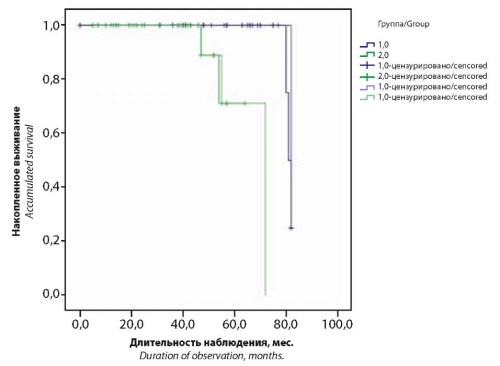
Objective: to improve the results of surgical treatment of patients with liver cirrhosis complicated by cirrhotic portal hypertension using transjugular intrahepatic portosystemic stent bypass surgery (TIPS) with selective gastric vein embolization.
Materials and methods: 62 patients with liver cirrhosis complicated by portal hypertension were examined and treated surgically. Group 1 included 27 patients admitted for surgical treatment using TIPS with selective embolization of the left gastric vein, while group 2 included 35 patients who underwent TIPS with embolization of two or more gastric veins.
Materials and methods: clinical and laboratory examination, instrumental diagnostic methods, surgical and statistical methods.
Results: complications such as portosystemic shunt thrombosis were found in 11.11% of patients in group I versus 8.57% in group II, recurrent variceal bleeding episodes in group I occurred in 22.22% versus none in group II, and mortality in group I was 11.11% versus 5.71% in group II. The risk of recurrent variceal gastric bleeding in group II patients was zero, necessitating selective embolization of two or more gastric veins.
Conclusion: when performing TIPS surgery, embolization of two or more gastric veins is advisable, given the absence of a risk of variceal gastric bleeding in this patient population when shunt thrombosis occurs.
Статьи

ISSN 2618-7876 (Online)